Introduction
The first quarter of the year is critical for businesses. It’s when teams analyse previous performance, track KPIs, and set the pace for the months ahead. Yet, many organisations and businesses stumble during Q1 reporting, making errors that can mislead decision-making or slow progress.
In this article we dive into the five most common reporting mistakes and how you can avoid them:
1. Over-Reliance on Manual Data Entry
When your team still relies on manually collecting data from multiple sources and entering it into spreadsheets, you are likely spending too much time on reporting and increasing the risk of costly errors.
Even one typo or broken formula can distort your results and affect important business decisions.
How you can prevent it:
Automating data collection and report generation improves both accuracy and efficiency by bringing data from different systems into one streamlined process.
This reduces manual errors, saves time, and allows your team to focus on analysing insights rather than compiling reports.
At Sunesis Consulting, we help you centralise your financial, sales, HR, and operational data into automated reporting systems that deliver real-time, accurate insights to the people who need them most.
2. Prioritising the Wrong Metrics
Focusing too heavily on vanity metrics means you are tracking numbers that look impressive but don’t accurately reflect business performance.
How you can prevent it:
Choose KPIs that align directly with your business objectives. Metrics tied to revenue, customer retention, profitability, and operational efficiency give you more valuable insights for decision-making.
When you focus on the right metrics, your reports become practical tools for action rather than just attractive summaries.
3. Late Reports and Missed Deadlines
If your team is preparing reports manually, delays are almost inevitable. This means the leadership team may not receive the insights they need on time, forcing decisions based on outdated information.

How you can prevent it:
Use automated reporting tools to generate reports on schedule without manual intervention. This ensures your stakeholders receive timely, accurate insights and can respond faster to changes in performance.
By reducing report preparation time, you give your leadership team the ability to make quicker and more informed decisions.
Still relying on manual reports? Stop wasting hours. At Sunesis Consulting, we help you automate reports tailored to your needs so you can generate accurate reports on schedule with minimal effort. Reach out today.
4. Lack of Clear Visualisation
Even if your data is accurate, your reports can still fail if they’re difficult to understand. Long spreadsheets packed with rows of figures make it hard for you and your stakeholders to spot trends, compare results, or identify issues quickly.
How you can prevent it:
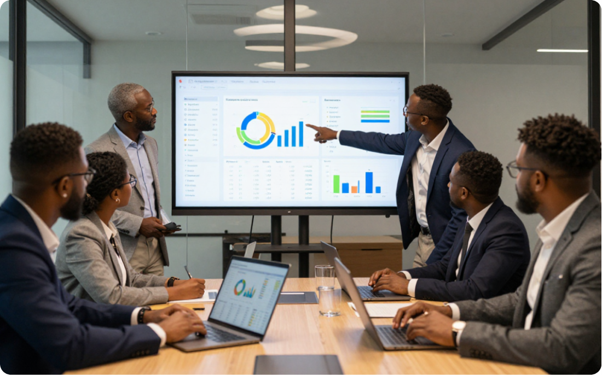
Use dashboards and data visualisation tools to present information in a clear and intuitive way. Charts, graphs, and heatmaps help you highlight patterns, simplify analysis, and make insights easier to act on.
Report automation platforms can turn your raw data into visual reports that support faster, smarter decisions.

Read Also: Don’t be stuck with one storyline for your presentation embrace dashboards
5.Lack of Standardized Definitions in Reporting
Not using standardized definitions is a common reporting mistake that can create confusion and inconsistency across your teams.
When departments define key metrics differently, such as revenue, leads, active customers, or conversion rates, your reports become unreliable and difficult to compare. This can result in misaligned decisions, wasted time in meetings, and a lack of trust in your data.
How you can prevent it:
To prevent this, you should standardize how your key metrics are defined, calculated, and reported across your business. A shared reporting guide or data dictionary helps every team stay aligned, while regular reviews and automated reporting reduce inconsistencies and improve accuracy as you grow.
What Are The Benefits of Report Automation For Your Business
Automated reporting can transform how you handle data by giving you accuracy, speed, and actionable insights. Here’s why you should consider it:
- Save Time
Manual report preparation can take hours—or even days. With automated reporting, you can reduce production time by over 60%, freeing you and your team to focus on analysis, strategy, and growth.
- Accuracy & Reliability
Mistakes in manual reports can cost you. Automation ensures you get real-time, reliable insights, so you can make confident, data-driven decisions every time.
- Customizable Dashboards
Custom dashboards turn financial, sales, HR, and operational data into the insights you actually need.
- Centralization & Security
Keep all your reports in one secure platform. You control who sees what, ensuring sensitive data stays protected while maintaining transparency.
- Easy Sharing & Collaboration
Sharing reports across your teams is simple. Automation enables seamless distribution, helping your staff collaborate effectively and make proactive business decisions.
- Smarter Decision-Making
With up-to-date insights at your fingertips, you can spot trends, address issues early, and take timely action, keeping your business ahead of the curve.
- Harmonized Reporting
Say goodbye to fragmented and inconsistent reports. Standardized reporting gives you clarity, consistency, and easy comparison across departments and periods.
- Operational Efficiency
Empower yourself and your team to respond faster. With streamlined reporting, you can respond quickly and make informed decisions as your business evolves.
Conclusion
Avoiding common reporting mistakes is essential to building momentum for a successful year.
When you automate reporting, focus on the right metrics, standardize definitions, and present data clearly, your business is better positioned to make smarter decisions, respond faster to challenges, and stay ahead of the competition.
At Sunesis Consulting Kenya, we work closely with you to design and automate reports tailored to your business.
We transform raw data into timely, accurate, and actionable insights by automating the collection, consolidation, analysis, and delivery of financial, sales, HR, and operational reports.
This reduces manual work, improves accuracy, and gives your leadership team the visibility they need to act with confidence.
With both Management Reporting Automation (MRA) for senior leadership and Operational Analytics Automation (OAA) for day-to-day performance monitoring, you can save time, reduce errors, centralise reporting, and empower your teams to make faster, more informed decisions throughout the year.