Lessons Learnt
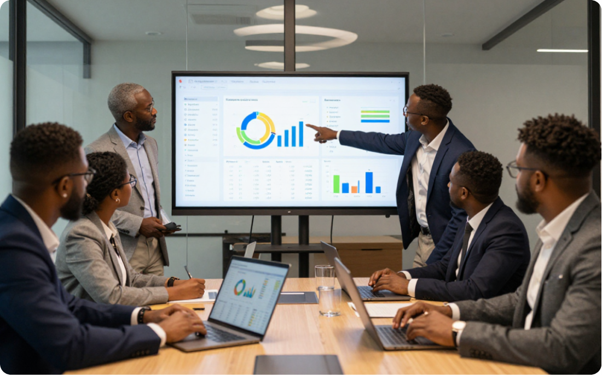
Over the 20 years, technology has evolved from spreadsheets and static reports to cloud analytics, automation, and real-time dashboards. Yet one thing hasn’t changed: organizations create value when they turn data into action.
As we celebrate our 20th anniversary, here are seven lessons we’ve learned from helping clients Gain insights, save time, improve performance and financial growth.
- Data Is Only Valuable When It Answers a Business Question
The most successful analytics projects don’t start with dashboards. They start with business questions.
- Which products are most profitable?
- Why are sales declining?
- Where are we losing customers?
- How can we reduce costs?
Organizations often invest in technology before defining the decisions they need to make. The most valuable insights emerge when data is aligned with clear business objectives.
- Limited Financial Visibility Restricts Growth
Many organizations have access to large volumes of operational and financial data, but lack the visibility needed to turn that information into profitable decisions.
We’ve worked with a multi-branch professional services organization, where management struggled to gain a clear view of profitability across branches, monitor receivables exposure, and evaluate project performance in a timely manner.
Critical decisions were often based on historical information by the time reports were consolidated.
By integrating data from accounting and operational systems into a centralized dashboard, leadership gained near real-time insight into profitability, receivables, branch performance, and consultant utilization. This improved analytical capability enabled faster intervention on underperforming projects, stronger cash flow management through proactive receivables monitoring, and more informed resource allocation across the business.
The result was not simply more efficient reporting, but greater financial control, improved profitability visibility, and better-informed decisions that supported sustainable financial growth.
The objective isn’t to produce reports faster. It’s to create the financial insight needed to drive better business outcomes.
- Data Quality Drives Financial Performance
For most organizations, data quality has a direct impact on financial outcomes.
We supported an organization seeking visibility into donor funding, project expenditure, procurement commitments, and budget utilization across multiple programmes. While dashboards provided visibility, inconsistent data entry practices across departments limited confidence in the information.
By standardizing data definitions, validation rules, and reporting processes, reporting accuracy improved significantly, enabling tighter budget control, better funding allocation, reduced cost overruns, and more effective management of programme resources.
Trustworthy data is the foundation of stronger financial performance.
- People Are Just as Important as Technology
Technology alone doesn’t drive transformation.
The organizations that gain the greatest value from analytics invest in both systems and people. When employees understand how to interpret information, ask better questions, and act on insights, reporting becomes a strategic asset rather than a compliance exercise.
Technology provides the tools. People create the impact.
- Less Data, Better Decisions
Many organizations suffer from information overload rather than information gaps.
We worked with a leadership team receiving more than fifteen different reports each month. While data was readily available, decision-makers struggled to identify what required action.
By redesigning reporting around a focused set of strategic KPIs, leaders gained clearer visibility into organizational performance, enabling faster decisions, better resource allocation, improved operational efficiency, and reduction in cost of manufacturing operations. Reporting became more actionable, with less time spent reconciling numbers and more time driving performance.
The best dashboards don’t show everything. They show what matters.
- Turning Insights into Action Creates Results
Data doesn’t improve performance. Decisions do.
A manufacturing organization we supported struggled to monitor production efficiency, inventory levels, and demand across multiple product lines because critical information was spread across different systems.
By consolidating production, sales, inventory, and procurement data into a single reporting environment, management identified recurring stock shortages and excess inventory. This allowed them to improve production planning, reduce stock-outs, and respond more effectively to customer demand.
The greatest value didn’t come from the dashboard itself. It came from the actions it enabled.
- Analytics Is a journey, not a Destination
The tools have changed dramatically over the past 20 years, but the fundamentals remain the same:
- Understand the business challenge.
- Trust the data.
- Focus on the right metrics.
- Empower people with skills.
- Turn insights into action.
Organizations that continuously improve their reporting and analytics capabilities consistently achieve better outcomes.
Looking Ahead
As we celebrate 20 years of service, we’re proud of the organizations we’ve partnered with and the impact we’ve helped create.
While technology will continue to evolve, our mission remains unchanged: helping organizations, gain insights, and make better decisions through data, analytics, automation, and business intelligence; saving time, cutting cost, increasing efficiency and growing revenue
Celebrating 20 Years of Helping Organizations Save Time and Gain Insights
As part of our 20-year milestone, we’re offering a Complimentary Assessment to help organizations identify opportunities to:
- Streamline reporting processes
- Uncover automation opportunities
- Improve visibility into performance metrics
- Build a stronger data-driven culture
Whether you are still relying on spreadsheets or looking to enhance existing dashboards and reporting systems, Book a Assessment to discover practical opportunities to improve reporting efficiency, automate manual processes, and gain clearer visibility into the metrics that matter most to your organization
In a focused, no-obligation session, our team will assess your current reporting and analytics environment and identify actionable recommendations that can help you save time, gain insights, and make better decisions.